
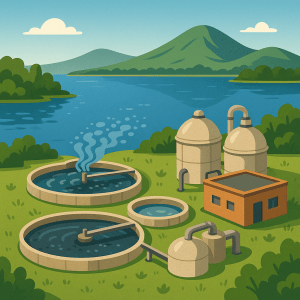
 Our top priority is to heal the lake’s body, restore its ecological balance, and bring back its ability to sustain life in harmony with its natural and cultural surroundings.
All funds raised—whether through donations, tourism activities, space rentals and sponsorships, media partnerships, or international cooperation—will be primarily invested in environmental sanitation projects and scientific research, in close collaboration with academic institutions.
This includes the full rehabilitation of all wastewater treatment plants in the lake’s watershed, along with the implementation of modern systems to manage domestic and industrial discharges that currently flow untreated into the lake. We will also conduct systematic monitoring of biodiversity—including aquatic, terrestrial, and bird species, both resident and migratory—to track ecosystem recovery over time.
Additionally, we will develop an integrated water management plan that combines appropriate technologies, community-based monitoring processes, and locally grounded public policies to ensure the project’s long-term sustainability.
This initiative is not just about cleaning the lake. It’s about reshaping the relationship between water, community, and territory—creating a replicable model of ecological restoration rooted in social justice.
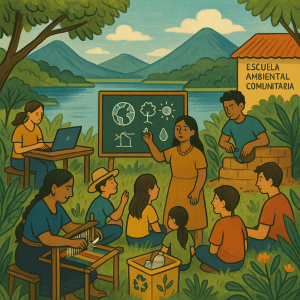 True environmental change begins in the hearts and minds of people. That’s why our initiative includes the creation of a Community Environmental School, where children, youth, and adults will learn about ecology, water stewardship, climate change, and Indigenous ancestral knowledge connected to nature.
In addition, we’ll offer hands-on workshops in weaving, sustainable fashion, recycling, natural construction, technology, and more. This space will also strengthen social ties and encourage community ownership of the territory as a source of life, culture, and learning. The lake will become a living classroom.
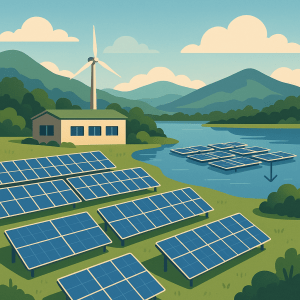 The park will serve as a working model of energy transition. In the first phase, one hectare of land will be dedicated to a ground-mounted solar photovoltaic plant to power the entire environmental center with clean energy.
In the second phase, we will explore the installation of floating solar panels on the lake, working with investors and technical experts. This innovation not only generates additional clean energy without occupying land, but also reduces water evaporation. The energy produced could also benefit nearby communities or be fed into the national grid.
Imbakucha will become a source of energy, too.
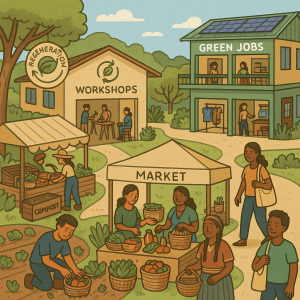 The center will be a hub for green jobs and local entrepreneurship. It will feature community-run organic gardens, composting areas, a local farmers market, skills training workshops, and commercial spaces managed by local residents.
We aim to foster a circular economy built on regeneration, ancestral knowledge, eco-friendly products, and inclusive opportunities for women, youth, and Indigenous communities. Every purchase made at the park will directly support nature and social equity.
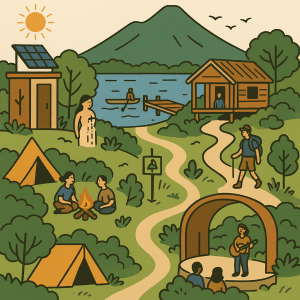 Ecotourism will be a key tool for education, inspiration, and financial sustainability. The park will offer eco-friendly family cabins, campgrounds with dry toilets and solar showers, a dock for recreational water activities, interpretive trails, a concert amphitheater, and a visitors center.
Every aspect of the design will focus on minimizing environmental impact while maximizing spiritual, ecological, and cultural connection with the lake. Visitors won’t just be tourists—they’ll be partners in regeneration.
We want everyone who visits Lake San Pablo to leave transformed.